Weekly Insight
Why Markets Ignore Bad News
Economic data says one thing, stocks say another. This week: why the gap exists and what it actually tells us.
Every week, we cut through the noise to tell you what actually moved markets and what might matter next. No predictions—just honest analysis of patterns, risks, and opportunities we're tracking.
Bad economic data, stocks going up. What gives? We dig into the disconnect.
Real-time sentiment indicators across key markets
Earnings season lifting spirits, even with rate worries
Nobody knows what the ECB will do next. Markets reflect that.
Asia's riding on China recovery bets. Fingers crossed.
That yield curve shape? Still making bond folks nervous.
Pick a topic, or browse everything
Weekly Insight
Economic data says one thing, stocks say another. This week: why the gap exists and what it actually tells us.
Big oil is buying up smaller players. We looked at recent deals and what they hint at for the next decade.
Export powerhouse pivots to domestic spending. What this shift means for anyone watching commodities or supply chains.
USD keeps surprising everyone. But if you look at past cycles, there might be a ceiling approaching.
When VIX spikes, some panic. Others spot opportunity. Here's how to tell which situation you're in.
We all focus too much on what just happened. A look at how to zoom out and see the bigger picture.
Five things that caught our attention
Markets wanted quick cuts. Fed's saying not so fast. Bond traders might need to rethink their 2025 bets.
AI hype is translating to actual revenue. Cloud spending picking up suggests companies are just getting started.
Another developer defaulted. The question now is how Beijing responds, and what it means for anyone watching emerging markets.
Crude's stuck in a range thanks to OPEC drama and geopolitics. Some interesting options plays opening up.
Money's flowing back to EM stocks. Dollar weakness and commodity prices helping. Latin America and Southeast Asia look promising.
Play with the data yourself
Stack sectors against each other. Performance, valuations, momentum — pick your timeframe.
Launch Tool →See what people are actually feeling about markets. Pulls from multiple sources so you get the fuller picture.
Launch Tool →Spot gaps between implied and realized vol. Works for stocks, indices, commodities — wherever there's option pricing.
Launch Tool →Everything we've ever written. Also tracks how our predictions panned out. (We keep ourselves honest.)
Browse Archive →15,000+ readers get our commentary in their inbox every Sunday evening. Useful stuff to read before Monday's open.
No spam, ever. Unsubscribe with one click.
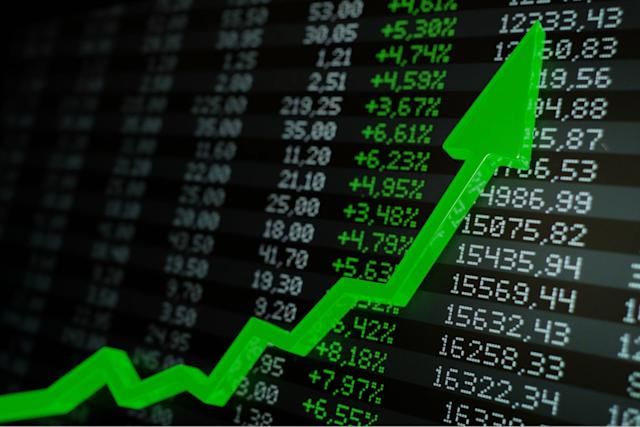
Economic data screams recession, yet stocks rally. Sounds crazy? There's actually a logic to it — just not an obvious one.
GDP disappoints. Unemployment ticks up. Headlines worry about the economy. And somehow... markets go up. This confuses a lot of people. But once you get how markets price information, it makes sense.
Here's the thing: markets don't care if news is good or bad in some absolute sense. They care whether it's better or worse than what people expected. A lousy jobs number that's less lousy than feared? That's bullish. Strong earnings that miss the whisper number? Selloff.
Central banks make this even weirder. Bad economic data often means easier money is coming. And easier money lifts asset prices. So bad news about the economy becomes good news for stocks. Welcome to post-2008 market logic.
Stop asking "is this good or bad news?" Start asking "what did people expect?" The market's reaction tells you more about positioning than the news itself ever will.
The big guys are buying up the little guys. But this isn't just about getting bigger. The real story is what they're buying and why.
We haven't seen this much M&A in energy since the early 2000s. The majors aren't just buying reserves anymore. They're after know-how and positioning for what comes next.
These acquisitions mix old-school oil and gas with renewables, carbon capture, and hydrogen. Companies are hedging their bets. They know the transition is coming but aren't abandoning fossil fuels either.
Buyers are paying premiums that suggest they see value the market doesn't. For us, that means watching potential targets and also keeping an eye on whether buyers are staying disciplined.
This consolidation wave isn't over. Winners will be companies that figure out how to keep pumping oil profitably while investing enough in the future to stay relevant.
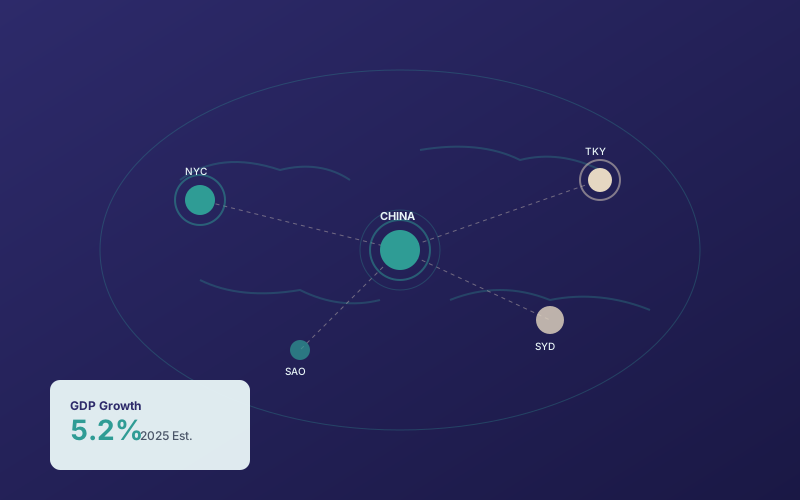
China built an economy on factories making stuff for everyone else. Now they're trying to build one where Chinese people buy more of that stuff themselves. It's a big shift.
Decades of growth came from exports and building infrastructure. That playbook's being retired. The new plan: get Chinese consumers spending. It won't happen overnight.
Companies are moving some production to Vietnam, India, Mexico. "China plus one" strategies are real. But nobody's completely leaving — too much expertise, too many suppliers, too much infrastructure.
The old commodity demand came from building roads and bridges. The new demand will look different. Less steel and cement, more of whatever Chinese consumers want.
Don't invest in the China of 2015. The China of 2025 is slower, more domestic, more service-focused. That's not necessarily bad — just different.
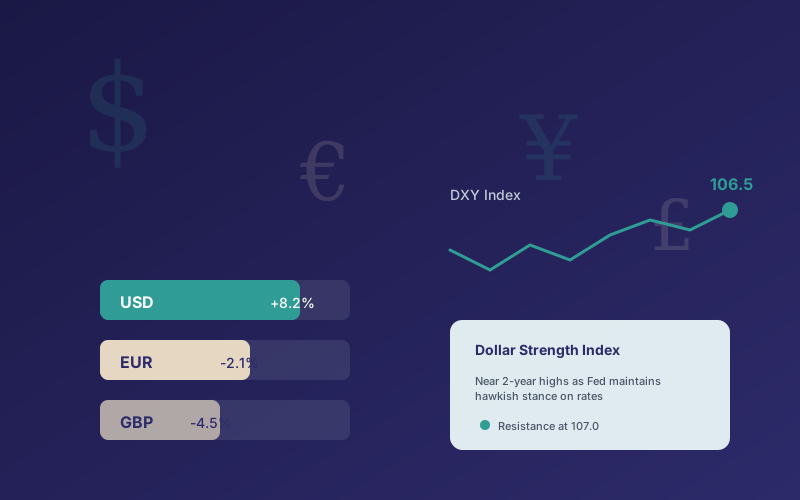
The dollar's been on a tear this year. Everything else looks weak by comparison. But history says these rallies eventually end.
Higher US interest rates than elsewhere. An economy that keeps surprising to the upside. And whenever things get scary, people buy dollars. Classic playbook.
We've been here before. The dollar's at levels that previously marked tops. Past peaks were followed by multi-year declines. Doesn't mean it happens tomorrow, but worth noting.
Fed starts cutting. Europe or Asia starts growing faster. Or risk appetite improves and people stop hiding in the dollar. Any of these could flip the script.
If you're US-based, the strong dollar has hurt your foreign holdings. If the cycle turns, that drag becomes a tailwind. International diversification might start looking better.
Most people see volatility as something to avoid. We see it a bit differently — spikes can mean opportunity if you know what you're looking at.
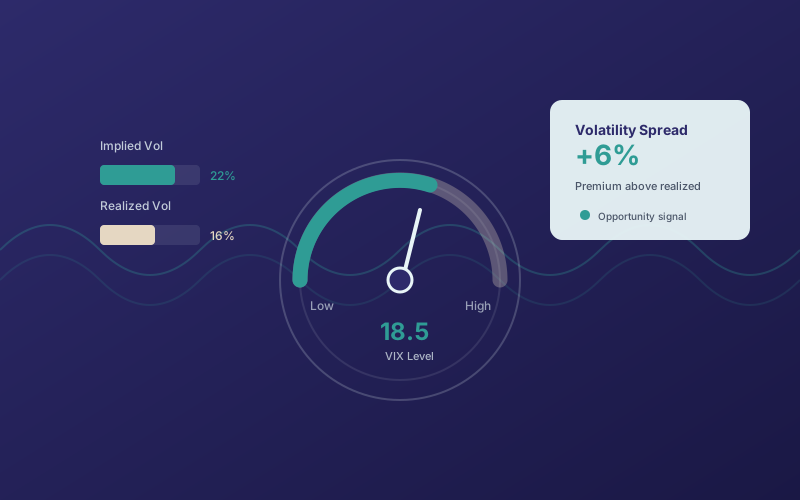
VIX measures what people think volatility will be, not what it actually is. And here's the thing: the market consistently overestimates future volatility. That gap? It's tradeable.
Volatility might be the most mean-reverting thing in markets. It spikes, people panic, then it calms down. Always. Timing the calm-down is the tricky part.
You can sell volatility during spikes, but that's playing with fire if you're wrong. Safer: just buy stocks when VIX is elevated and wait for things to normalize.
VIX is showing some nervousness but nothing extreme. Stay balanced, but keep some powder dry for when things get really scary.
We all do this: something just happened, so we assume it'll keep happening. It's human nature. It's also a great way to make bad investment decisions.
Evolutionarily, focusing on recent threats kept you alive. In investing, it makes you buy high and sell low. What happened recently often matters less than longer-term patterns.
Remember early 2023? Everyone was sure the bear market would continue — because 2022 was brutal. The market rallied instead. Or the late '90s, when everyone extrapolated tech gains forever. We know how that ended.
Smart investors build systems: long-term valuation rules, regular rebalancing schedules, checklists that force you to consider history beyond last quarter.
Ask yourself: am I just reacting to what happened lately? Pull up a 20-year chart. Look at previous cycles. Then decide.